

From Earth observation to research into the atmosphere of Mars: OIP develops advanced optical instruments in Flanders that contribute to international space missions. We spoke to Bart Desoete, Business Development Manager at OIP, about the company’s expertise – as a member of Flanders Space – its key achievements, and the challenges and opportunities facing the European space industry.
Could you briefly introduce yourself, your role and the company?

My name is Bart Desoete and I have been working as Business Development Manager at OIP for five years. My career has taken place almost entirely within the Flemish space sector. Before joining OIP, I worked at Antwerp Space and Redwire Space, then known as QinetiQ Space.
Throughout my career, I have progressed from technology and engineering, via project management, to business development. This combination of technical and commercial experience gives me a broad perspective on the sector. I am also someone who enjoys taking on new challenges and is constantly on the lookout for new opportunities.
OIP is a Belgian company with over a hundred years of history. It was founded in Ghent and is now based in Oudenaarde. We operate in both the defence and space sectors, with electro-optical technology as our core area of expertise.
Within OIP, we distinguish between three business areas: OIP Sensor Systems for defence applications, OIP Space Instruments for the space sector, and OIP Land Systems, based in Tournai, which focuses on the modernisation of military vehicles.
We have been active in the space sector for over thirty years. Whilst we originally focused mainly on developing components and subsystems, we have now grown into an integrator of complete optical instruments and payloads. From the initial analysis and design through to integration, testing and qualification: we manage the entire development process.
With around 170 employees, mainly in Flanders, we have a strong local knowledge base which we utilise for international projects.
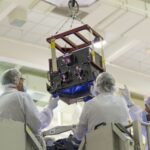
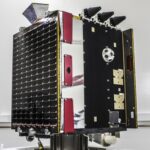
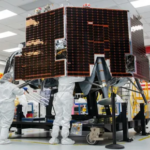
How does OIP contribute to the space sector in practical terms? What are your key solutions and applications?
Our core expertise lies in the development and integration of advanced electro-optical systems. For the space sector, this mainly involves cameras, spectrometers and specialised scientific instruments.
These are used in various fields of application, including Earth observation, climate research, Space Situational Awareness and scientific space missions.
What sets us apart is our ability to develop and integrate complex instruments from start to finish. In doing so, we bring together various engineering disciplines, from optics and electronics to mechanics and systems engineering. We do not necessarily manufacture all components ourselves, but we do take responsibility for the entire system, including integration, testing and qualification.
This system expertise is essential in the space sector, where instruments must not only be extremely accurate and reliable, but also able to withstand the extreme conditions in which they operate.
Furthermore, our experience with electro-optical systems in both the space and defence sectors offers interesting opportunities to leverage technologies and knowledge across both sectors.
Could you highlight one or two key successes and explain why OIP excelled in these areas?
A prime example is PROBA-V, a satellite launched in 2013 that played a key role in ensuring the continuity of European Earth observation between the SPOT Vegetation missions and the Copernicus programme.
For PROBA-V, we developed exceptionally compact optical technology, enabling advanced Earth observation on a relatively small satellite. That was a significant technological innovation at the time.
What is interesting is that this technology remains relevant today. It is being reused for the CLIM (Cloud Imager) instrument on the future European CO2M mission and will also be deployed in a commercial satellite constellation.
This illustrates how an initial investment in technological development, partly supported by Belgian space funding via BELSPO, can evolve into a technology that is repeatedly deployed in both institutional and commercial missions.
A second example is NOMAD, a spectrometer on board the ExoMars Trace Gas Orbiter, which has been orbiting Mars since 2016 and is investigating the composition of the atmosphere.
Among other things, the instrument measures methane and other gases, thereby providing valuable scientific information about the atmosphere and the history of Mars.
NOMAD illustrates our expertise in complex spectrometers, a technological field in which development often takes many years. This knowledge also forms an important basis for other specialised instruments, such as ALTIUS.
Both examples demonstrate that, from Flanders, we can contribute to highly ambitious international space missions. Our strength lies in the combination of in-depth optical expertise, multidisciplinary engineering and the capacity to fully integrate and qualify complex instruments.
What are the key developments and trends you foresee for the future?
We see four key developments that will significantly influence the space sector in the coming years.
Firstly, there is the continued commercialisation of space travel. Whilst the sector has traditionally been driven largely by institutional programmes, we are seeing an increasing number of commercial players and applications. Lower launch costs and the emergence of satellite constellations are creating new market opportunities.
For OIP, this means that we are increasingly focusing on reusable technologies and products that do not need to be developed from scratch for every mission. One example is the development of a very high-resolution camera for, amongst other things, defence-related applications, for which we see a long-term market.
A second key trend is the growing interdependence between space and defence. Belgium, Europe and NATO are increasingly viewing space as a strategic domain. New programmes are creating opportunities for technologies that can be used for both civilian and military purposes. This calls for a clear dual-use approach.
In addition, artificial intelligence is becoming increasingly important. We are investigating how we can integrate more intelligent data processing directly on board satellites. We are already using AI in our ground-based defence applications, and we aim to extend that expertise further into the space sector.
Finally, we are seeing growing demand for increasingly advanced optical instruments. Alongside traditional visible-light cameras, interest in thermal and hyperspectral imaging is on the rise. By utilising a broader part of the electromagnetic spectrum, satellites can collect ever more and increasingly accurate information.
For a company like OIP, with its many years of experience in specialised optics, this offers particularly interesting prospects.
In your view, what is important for the success of the European and Flemish space industry?
Europe possesses exceptionally strong technological expertise, but we must succeed in translating that knowledge into competitive and scalable products.
One of the main challenges is making the transition from a promising technology to a fully-fledged commercial product. That transition requires substantial investment and support. Many European companies are confronted with the so-called ‘valley of death’: the phase in which a technology is technically successful, but insufficient resources are available to develop it further into a market-ready product.
In my view, this is where the Flemish, Belgian and European authorities have an important role to play.
But it is not just about funding. Above all, Europe needs a clear and ambitious space strategy, linked to a strong industrial vision.
We need to think more in European terms and less exclusively in terms of individual countries. That means encouraging cooperation, developing complementary industrial ecosystems, scaling up production capacities and making clear choices about where Europe wants to distinguish itself technologically.
Earth observation is a good example of this. A single country can only achieve a limited impact with a few satellites. However, when those satellites form part of a larger European system in which data is shared, a much more powerful whole emerges.
This European cooperation is also essential for Flemish companies such as OIP. We have the expertise and the people to compete on the international stage, but we need sufficient scale and a strong European industrial strategy to further strengthen our competitive position.
Although the space sector is traditionally organised along strong regional and continental lines, we are also looking beyond Europe for new opportunities. This demonstrates that international expansion is possible, provided you have sufficiently strong technological assets.
My key message is therefore that Europe must have the ambition not only to develop its technological expertise, but also to capitalise on it industrially, commercially and strategically. Thanks to its specialised companies and strong knowledge base, Flanders can continue to play a key role in this regard.
Want to find out more about the ACB Group? Visit: https://flandersspace.be/en/team/oip-2/

Leave a Reply
Your email is safe with us.