

Interview with Kathleen Philips, CEO of TUSK IC
Satellite communications are playing an increasingly important role in our society. New satellite constellations offer unprecedented possibilities, but to actually make use of them, advanced and affordable technology on the ground is required. The Flemish company TUSK IC is developing innovative chips for this purpose, designed to make satellite communications more accessible to a wide range of users.
We spoke to Kathleen Philips, CEO of TUSK IC, about the company’s ambitions, the technological challenges, the Flemish ecosystem and the opportunities for Europe in the rapidly growing space sector.
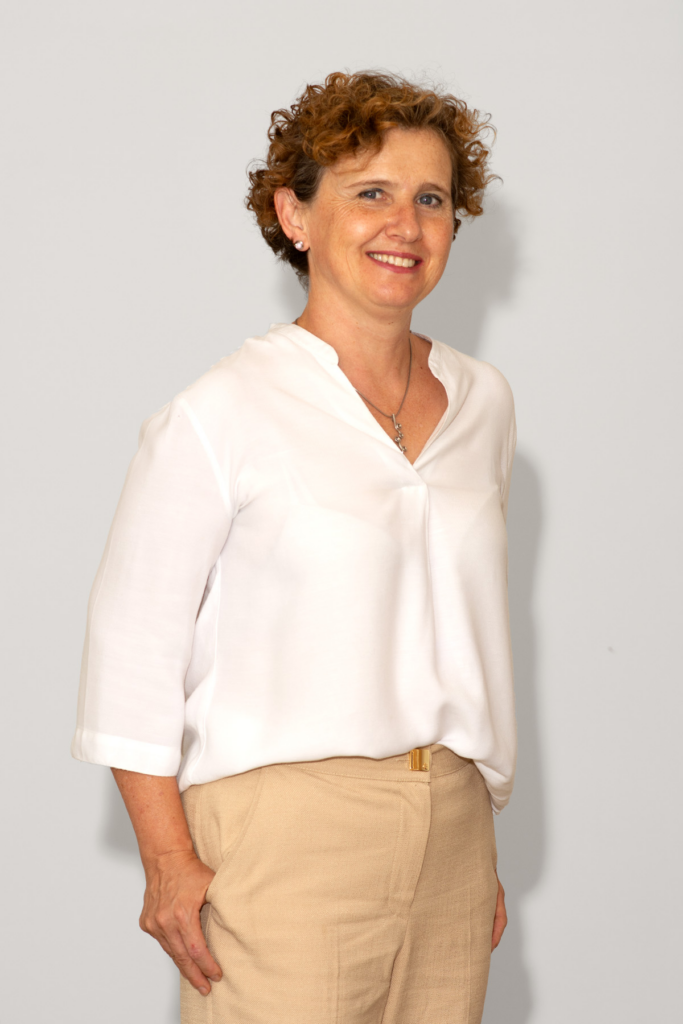
Kathleen, could you please introduce yourself and tell us how you came to join TUSK IC?
I trained as an electronics engineer and have spent most of my career in the Netherlands. I started at Philips Research in Eindhoven, where I spent twelve years working in research and chip development. It was a particularly inspiring environment, where I had the opportunity to collaborate with leading researchers and inventors.
In 2007, I moved to imec in Eindhoven, where I helped establish the Dutch branch. There, I progressed from programme manager to managing director and was also responsible for activities relating to chip design.
After nearly thirty years in the Netherlands, the move to TUSK IC was a great opportunity to build something new. The company already possessed strong technological expertise and had the ambition to become a major player in chips for satellite communications. That combination of entrepreneurship, technology and growth potential appealed to me straight away.
TUSK IC was founded in 2018. How did the company come about, and where does the name come from?
TUSK IC was established in 2018 as a spin-out from KU Leuven. The founders had carried out research together at the university and subsequently gained experience in industry. They decided to pool their expertise and set up their own company.
The name TUSK refers to the founders’ initials.
Initially, the company focused on designing high-frequency chips for other businesses, primarily in the automotive industry, but also for industrial and medical applications.
From a technological point of view, the move into space was not such a big leap. The automotive sector, too, imposes particularly stringent requirements in terms of reliability, service life and performance under extreme conditions.
What did change fundamentally, however, was our business model. Whereas we used to develop chip designs mainly on behalf of clients, we now develop our own products for satellite communications. We design the chips, have them manufactured and market them ourselves.
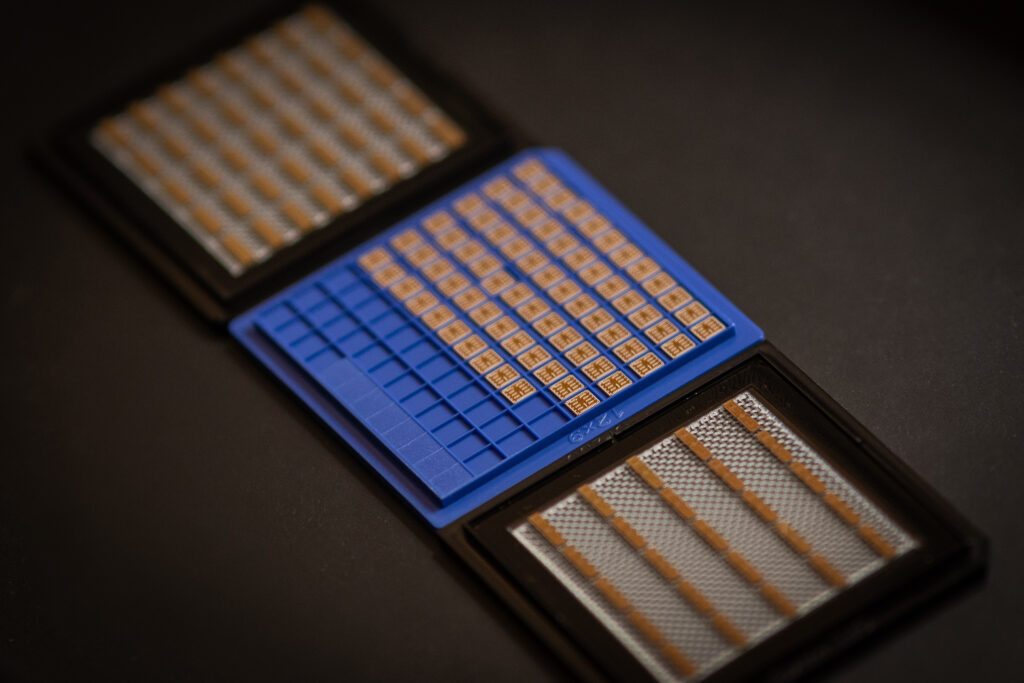
Your mission is to make satellite communications more accessible. Where exactly does the challenge lie?
When we talk about satellite communications, most people immediately think of satellites in space. But those satellites are of little use if we cannot communicate with them efficiently from here on Earth.
That is precisely what TUSK IC focuses on. We develop chips for user terminals on Earth, enabling professional users – and eventually consumers too – to communicate with satellites.
There is currently huge investment in new satellite constellations. But as soon as that capacity becomes available, there must also be sufficient infrastructure on Earth to make use of it.
And that is particularly challenging from a technical point of view. A satellite is located hundreds or thousands of kilometres away from the user. To communicate reliably over that distance, you need high-performance technology.
Moreover, that technology must be compact, energy-efficient and affordable. Whilst a satellite can carry a large, expensive antenna, a user terminal on Earth must be able to be produced at a much lower cost.
That is the challenge we want to tackle.
What makes your technology different from the solutions available today?
A key innovation lies in the way our chips are developed and manufactured.
Specialised semiconductor technologies are often used for satellite communications. These offer excellent performance, but are generally more expensive and rely on a limited number of specialised manufacturing facilities.
We develop our chips using standard CMOS technology, the same basic technology that is widely used in consumer electronics.
This means that our chips can be manufactured on existing production lines designed for high volumes and competitive unit costs.
This is essential, as a modern satellite antenna can contain hundreds of chips that work together to send signals to a satellite or receive signals from it.
So, as the market grows, large numbers of chips are also required. By opting for scalable production technology from the outset, we create the opportunity to significantly reduce the cost price.
Our ambition is to make satellite communications not only more technologically advanced, but also more affordable.
Flanders has a great deal of technological expertise. Do you find enough talent here to realise your ambitions?
Absolutely. In fact, we owe our very existence to the strong expertise available here.
KU Leuven enjoys an excellent international reputation in the field of high-frequency chip design. Other universities and research institutions also contribute to a particularly strong technological ecosystem.
We are successful in attracting the right talent for our chip design activities.
The challenge sometimes lies more with the operational and industrial side of the business. People with experience in scaling up chip production and organising the associated business processes are harder to find. These are skills that you mainly develop through practical experience.
But we can also be proud of our strengths. Europe, and Flanders in particular, possesses an impressive knowledge base in semiconductor technology.
What we may not have done enough of in the past is to systematically turn that knowledge into successful international businesses. That is where new opportunities lie today.
Alongside talent, capital is a key prerequisite for growth. How do you perceive the investment climate for hardware companies?
The investment climate is improving, but there is still work to be done.
For software companies, there is now a relatively well-developed investment landscape in Europe. There are many success stories, and investors are familiar with the risks and growth models of such businesses.
With hardware, the situation is different. Development costs are high, lead times are longer and the risks are more difficult to assess.
Fortunately, we soon attracted interest from public investment funds. The biggest challenge was finding enough private investors who were familiar with hardware and semiconductor technology.
In the end, we found them outside Belgium, but still within Europe.
The positive thing is that there is growing focus on strategic autonomy, European chip development and our own technological capabilities. This creates new opportunities.
Above all, we need to create more success stories. These, in turn, will attract new investors and strengthen the ecosystem.
Where does TUSK IC aim to be by 2030, and what does that mean for users of satellite communications?
Our ambition is clear: by 2030, we aim to become one of the leading suppliers of chips for satellite communications.
In doing so, we are looking beyond the current generation of satellite systems. In the coming years, we expect to see ever-greater convergence between traditional mobile networks and satellite communications, including in the development of 6G.
Our technology must be able to play a key role in this.
We summarise our mission as ‘Democratising Satcom’.
For us, this means two things.
On the one hand, we want to contribute to open solutions that enable communication with different satellite constellations, rather than making users dependent on a single closed system.
On the other hand, we want to make satellite communications more affordable. By utilising standard chip technology and economies of scale, we can help to reduce the cost of user terminals.
At present, we are focusing primarily on professional applications, but in the longer term we also want to contribute to solutions that are accessible to consumers.
Finally, how do you view the future of the Flemish space industry?
What has particularly struck me since my return to Belgium is the wealth of knowledge and expertise that Flanders has built up in the field of space.
We have a remarkable concentration of companies, research institutions and specialised technology firms. That is not something to be taken for granted in a relatively small region.
Moreover, the space economy is still in its infancy. The potential is enormous, both technologically and economically.
At the same time, space is becoming increasingly important for our strategic autonomy. Satellite communications have become critical infrastructure. As Europe, we must avoid becoming entirely dependent on a limited number of external players for essential communications services.
That is why it is important that we continue to develop our own knowledge and technology and invest in companies that can grow internationally.
Here in Flanders, we have the talent, the expertise and the companies to play a key role in this. Now, above all, we must demonstrate what we can achieve with them.

Leave a Reply
Your email is safe with us.